

A navigation instruction arrives late, a street is easy to miss or you recognise a turning only after it is no longer a sensible option. The important learning moment is what happens next. A route error does not need to become a rushed manoeuvre. Discuss recovery decisions with your instructor before using navigation in a lesson, then practise treating the route as information to interpret alongside the road rather than an order that overrides it.
Agree how instructions will be handled
Before moving, ask how the instructor wants you to respond if a direction is unclear or arrives too late. Establish how you can ask for clarification and when the instructor will provide additional guidance. This is a conversation about communication and judgement, not a request for a guaranteed exam script. You want to know how the lesson will support a calm, safe response when the navigation task does not unfold as expected.
Check the destination and basic settings while stationary. Adjust sound and display positioning with the instructor's help so that the information is usable without unnecessary searching. If the system is unfamiliar, locate its main controls before the drive. Do not make learning a new menu part of an already demanding traffic situation. Preparation should reduce distraction rather than create a complicated setup that you feel obliged to manage continuously once the lesson begins.
Separate the route objective from the driving task
The navigation device proposes a route. Your driving decisions still depend on the actual signs, layout, road users and conditions you encounter. If the proposed turning cannot be followed appropriately, the route objective must wait. Ask your instructor to discuss examples when the car is parked or during the debrief, so that you can recognise the principle without trying to solve every possible scenario in advance from a diagram or a remembered map.
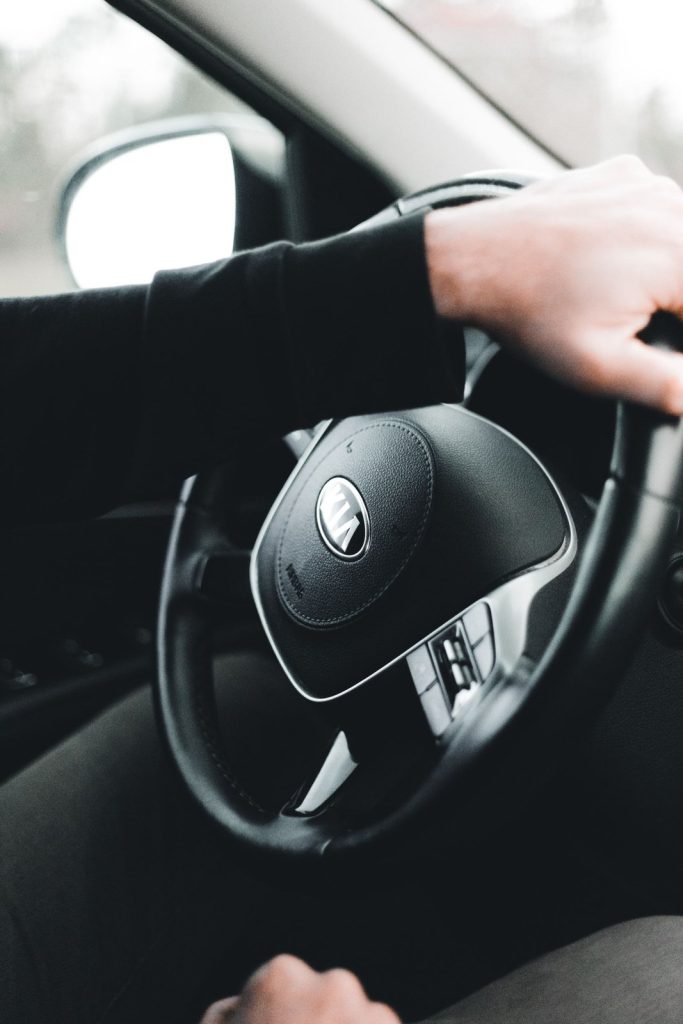
Avoid rehearsing a last-second correction as though reaching the instructed street is the only measure of success. The lesson is more valuable when it examines how you noticed the situation, what options remained and how you maintained an appropriate course of action. A missed turn can expose a useful observation issue, but it should not encourage an abrupt response merely to conceal the mistake from the instructor or arrive at the destination slightly sooner.
Recognise the pressure to fix it immediately
Many learners feel embarrassed when they realise they have gone the wrong way. Say so in the debrief if that feeling affected your decisions. Naming the pressure helps the instructor distinguish a navigation problem from a confidence or workload problem. You do not need to pretend that you remained entirely relaxed. You need a repeatable way to notice uncertainty, communicate clearly and keep the driving task from being displaced by the urge to correct the route.
One useful parked discussion is to reconstruct the moment in stages. When did you first hear the instruction? When did you identify the street? What road information was available? At which point did the expected option stop being appropriate? This is not an exercise in blaming yourself for every hesitation. It helps locate the decision that needs practice, which may be earlier route interpretation rather than the turning manoeuvre itself.
Let the instructor choose suitable practice conditions
Ask for navigation practice when the instructor judges your current control and observation skills ready for it. Begin with a level of complexity that allows meaningful learning, then vary the route as appropriate. Repeating one memorised journey can make navigation feel easy while leaving the interpretation task largely untested. Variation is useful when it reveals how you respond to new information, but it should be introduced within a lesson your instructor can supervise properly.

There is no need to manufacture a dangerous surprise to learn about recovery. Ordinary route variation, an instructor-led discussion and naturally occurring uncertainty can provide material for a debrief. If a task becomes overwhelming, communicate that. The instructor can adapt the level of support. The aim is to develop judgement under realistic conditions, not to prove that you can tolerate unlimited information or follow a device without ever asking a question.
Keep device handling out of the recovery scramble
If settings need changing, discuss an appropriate opportunity with your instructor rather than attempting to edit a destination while continuing through an unfamiliar situation. Dutch government guidance explains restrictions on holding a phone while driving and also highlights the attention demands of phone use. Even where a particular interaction is technically possible through a mounted system, the learning question remains whether it draws attention away from what you need to observe and decide.
Record which settings caused confusion so you can address them before the next lesson. A voice instruction that is too quiet, a display that is difficult to interpret or an unfamiliar route preference may be a preparation issue. Fixing that issue is more useful than repeatedly blaming your concentration. Keep the device's limitations visible in your learning record while retaining responsibility for developing the road-reading and communication skills that navigation cannot supply for you.
Debrief the recovery rather than the embarrassment
After the lesson, ask the instructor to identify what went well in the recovery and what should change. A helpful note describes a decision, such as recognising that the route needed to be reconsidered, rather than only recording that you missed a street. If observation or planning was late, connect that finding to a specific next task. You can improve the underlying skill without turning one wrong direction into a judgement about your overall ability.
Navigation becomes more useful as you learn to treat uncertainty as an ordinary part of driving. The system may recalculate; the instructor may give a different direction; a suitable opportunity may come later. Your learning objective is not perfect obedience to a route. It is a calm sequence of observation, appropriate decisions and clear communication when the route and the situation no longer match. That is a skill worth practising deliberately.