Rain changes the information available to a driver as well as the condition of the road. Spray, reflections, reduced contrast and water on the surface can make a familiar route feel different. A lesson in wet weather should therefore be approached as an opportunity for guided adaptation, not as a test of whether you can drive exactly as on a dry day. Discuss the conditions with your instructor and keep the lesson’s demands appropriate to your current ability.
Check visibility before joining traffic
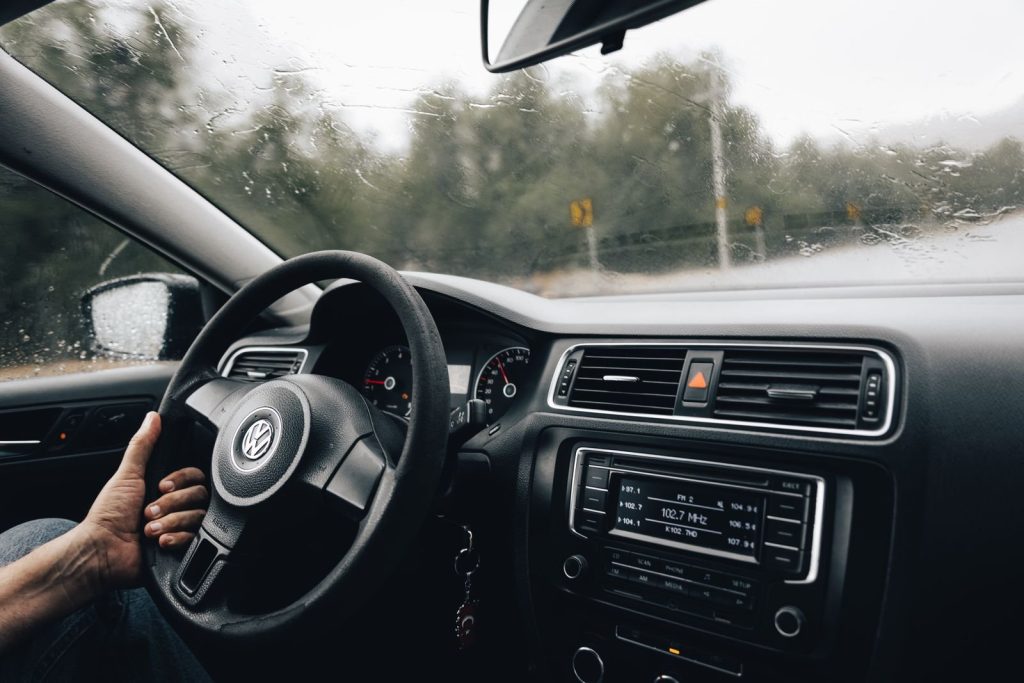
Ask the instructor to explain the vehicle’s ventilation, demisting, wipers and lighting controls before you need them urgently. Make sure you can recognise when the view is deteriorating. Knowing where a control is while stationary is useful preparation, but you also need to understand how changing conditions affect the view during a drive.
If the windscreen or mirrors do not provide a clear view, raise the problem immediately. Do not assume that continuing will make it easier to solve. The instructor can guide a suitable response and decide whether the conditions support the planned exercise. Adequate visibility is a practical requirement, not a minor comfort detail to ignore in order to keep the timetable.
Discuss speed and following space as changing decisions
Wet conditions can require a different approach to speed, spacing and preparation. Ask what evidence in the road scene should influence those decisions. A posted limit is not a guarantee that travelling at it is suitable for every condition. The available view, traffic, surface and your current task all matter.
Avoid memorising an unsupported multiplier as a complete answer. Numerical learning material can illustrate a principle, but the actual situation still needs observation and judgement. During the debrief, identify where you first noticed the need to adjust and whether the change happened early enough. Timing is often more useful feedback than a general comment about being cautious.
Watch the surface and the space beside you
Standing water, drainage areas, road markings and debris can affect the scene. Another vehicle may create spray or change position around a puddle. Ask the instructor how to anticipate these possibilities without becoming fixated on one patch of road. You still need a broad picture of nearby users and the direction you intend to take.
If a surface condition is unclear, describe what you can see rather than guessing its depth or grip. A photograph or remembered route cannot establish what the water is hiding today. The instructor can help you recognise when more space, a different plan or not proceeding is the appropriate response to the available information.
Choose suitable learning goals
A wet-weather lesson does not need to repeat every demanding exercise from a dry session. Discuss a focused objective such as maintaining visibility, reading spray or preparing earlier for a familiar type of junction. An appropriate task lets you observe the effect of the conditions without adding unnecessary complexity all at once.

Ask how postponement or cancellation works if weather makes the planned lesson unsuitable. That is both a safety discussion and an administrative one. Know the school’s policy, but do not let concern about using a booked lesson override a proper assessment of conditions. Keep any changed arrangement in writing with the appointment record.
Record what changed in your driving plan
After the lesson, note a few differences from a dry drive. Include observations about visibility, traffic behaviour, route choice and the amount of preparation needed. Describe one example where adapting early helped. This makes the lesson more transferable than writing simply that rain was difficult or that the same route felt slower.
Review unresolved questions with your instructor before the next wet drive. Experience becomes useful when you understand the decisions behind it. A successful lesson in rain does not make every future storm manageable, and conditions can deteriorate. Keep the habit of assessing the actual journey and seeking an appropriate safe alternative when the information or conditions no longer support the plan.
Sources: CBR; RDW — Driving licence.